
Additional Resources & Links
Discover connections to regional history, related sites, and expanded context beyond the mill.
Places, Collections & Resources Where the Crane Story Survives
The story of the Crane family and Crane Mill extends far beyond a single property. Nearly four centuries of history can still be explored through surviving homes, museums, archival collections, original documents, historic landscapes, and communities across New Jersey and New England.
The resources gathered here have been selected for their historical value and connection to the story told by the Crane Legacy Project. Wherever possible, museums, libraries, government resources, archives, original documents, and other institutional sources have been given priority.
Cranetown to Montclair
Long before there was a Montclair, part of the developing community at the foot of First Mountain became known as Cranetown. Members of the Crane family were among its earliest settlers, and successive generations became closely connected with the religious, civic, agricultural, and commercial life of the community.
Cranetown was not simply a name preserved by later family tradition. Historical records document its use while the community itself was still developing. In 1694, Azariah and Jasper Crane, sons of Jasper Crane of Newark, were each granted 150-acre tracts at the foot of the mountain. A later historical account specifically records that the settlement became known as Cranestown, or Cranetown, after these early Crane settlers.
As the community grew, Crane family members helped shape its development. By the early nineteenth century, Israel Crane's general store had become an important center of local commerce, while his involvement in the Newark-Pompton Turnpike strengthened connections between the community, Newark, Caldwell, and the agricultural countryside farther west.

The community changed names as it changed character.
Cranetown eventually became part of Bloomfield, was officially known as West Bloomfield, and in 1868 emerged as the separate township of Montclair.
The name Cranetown disappeared from the map, but traces of the community remain. Historic Crane houses, early roads, deeds, family papers, maps, archival collections, and the landscape itself still provide tangible connections to the settlement and the generations who lived there.
Why it matters: Cranetown forms an important geographic and historical bridge in the Crane story. From the family's seventeenth-century beginnings in Newark, successive generations moved westward through Cranetown and across First Mountain toward Horseneck, Caldwell, Pine Brook, and ultimately the landscape associated with Crane Mill.
Nathaniel Crane House
Montclair, New Jersey | Built 1818
Built in 1818 by Captain Nathaniel Crane Jr., a cousin of Israel Crane, the Nathaniel Crane House stands on land associated with the early Crane settlement in Montclair. Incorporated into the house is a cornerstone dated 1732, preserved from an earlier structure on the property.
Today, the house serves as the visitor center for the Montclair History Center and contains exhibits interpreting nineteenth-century community life, including a general store and schoolroom.
Why it matters: The Nathaniel Crane House provides another tangible connection between successive generations of the Crane family, Cranetown, and the community that eventually became Montclair.


Montclair History Center
The Crane Family Papers preserve an extraordinary documentary record of generations of the Montclair Crane family. The collection comprises thirteen archival boxes containing deeds and indentures, wills, journals, ledgers, surveying and mathematics books, family Bibles, maps, photographs, correspondence, genealogical research, and other family records.
Its holdings include material associated with Azariah Crane, Israel Crane, Oliver Crane, Amos Crane, Zenas Crane, and many other members of the extended family. Together, these documents provide an unusually rich resource for understanding the Crane family and the development of Cranetown and Montclair.
Why it matters: The collection allows people, properties, businesses, and family relationships to be followed across generations using original records.
Original Documents & Archives
The 1752 Azariah Crane Deed
Montclair Public Library
This surviving eighteenth-century deed records a transfer of Crane family land and provides important evidence for reconstructing the geography of the early Crane settlement. Its property description helps locate Crane holdings in relation to First Mountain and the road leading west toward Horseneck, preserving a documentary connection between Cranetown and the family's movement into the interior of Essex County.
Why it matters: The deed allows part of the early Crane landscape to be reconstructed from an original document created while that landscape was still developing.
Explore the 1752 Azariah Crane Deed & Transcript(opens in new tab)

Crane Family Papers
Montclair History Center
Thirteen boxes of archival material document generations of the Montclair Crane family. The collection includes original deeds and indentures, wills, journals, ledgers, surveying and mathematics books, family Bibles, maps, photographs, correspondence, and genealogical research.
Among its holdings are material associated with Azariah Crane, Israel Crane, Oliver Crane, Amos Crane, Zenas Crane, and many other family members.
Montclair Public Library Local History Collection
The Montclair Public Library's local history resources preserve photographs, newspapers, maps, documents, books, and research material relating to Montclair and the communities that preceded it. Among these holdings is the surviving 1752 Azariah Crane deed, an important primary source for understanding the early Crane landscape.
Why it matters: These collections preserve the wider community record needed to place Crane family documents within the history of Montclair.
Explore Montclair Public Library Local History(opens in new tab)
West Caldwell, Horseneck & Crane Mill
The Crane story continued westward through northern Essex County into the historic Horseneck district and the communities that became Caldwell and West Caldwell. Here another branch of the family became connected with the established water-powered mill along Pine Brook that would eventually become known as Crane Mill.

Zenas and Mary Crane Homestead
The historic Crane family homestead at 289 Westville Avenue in West Caldwell, now home to the Historical Society of West Caldwell.
Zenas and Mary Crane Homestead
289 Westville Avenue, West Caldwell | c. 1853
The Zenas and Mary Crane Homestead stands on property associated with generations of the Crane family in West Caldwell. An earlier Crane house occupied the site before the nineteenth-century homestead that survives today.
Now home to the local historical society, the house preserves an important physical connection to the Crane family's long presence in Westville.
Why it matters: The homestead survives within historic Westville, where Crane and Harrison families farmed and where the local sawmill formed part of the working landscape.
Crane's Mill Today
459 Passaic Avenue, West Caldwell, New Jersey
Today, the historic Crane Mill property is home to Crane's Mill, a senior living community that opened in 1998. Although the mill buildings no longer stand on the site, the Crane's Mill name preserves a visible connection between the property today and the water-powered enterprise that occupied this landscape for generations. The community itself recognizes this history, tracing the property from its early use as a mill through generations of Crane family operation and the close of the working mill in 1967.
The landscape has changed dramatically, but the survival of the name provides an important link between past and present. For the Crane Legacy Project, it is meaningful that a place so closely associated with generations of the Crane family continues to carry the Crane's Mill name more than half a century after the sawmill ceased operation.
Visit Crane's Mill Senior Living Community(opens in new tab)


The Colonial World
The Crane story began generations before Crane Mill. Several places associated with Jasper Crane's seventeenth-century life provide important connections to the colonial world in which the family's documented American history began.
New Haven, Connecticut Secondary Title
Jasper Crane appears in the documentary record during the formative years of New Haven Colony, one of the ambitious Puritan settlements established in New England during the Great Migration. His years there placed him within a community whose religious, civic, and commercial institutions were still being created.
New Haven later became the permanent home of Yale University, giving the landscape Jasper knew an extraordinary later history of its own.
Why it matters: New Haven provides the setting for some of the earliest surviving records of Jasper Crane's life in America and the beginning of his long involvement in colonial civic affairs.
Branford, Connecticut
Jasper spent an important part of his public life in Branford, where surviving town records document his involvement in the practical government of the community. He represented Branford and later served as a magistrate of New Haven Colony.
Branford also became important to the later migration that established Newark, connecting Jasper's Connecticut years with the next major chapter of the family's history.
Why it matters: Branford helps explain the community, religious relationships, and civic experience that preceded Jasper Crane's move to New Jersey.
Yale University Connections
Several names preserved at Yale University reflect communities and religious leaders who formed part of the seventeenth-century world in which Jasper Crane lived.
Branford College carries the name of the Connecticut community where Jasper lived and served. Pierson College honors the Reverend Abraham Pierson, the Branford minister who later became an important leader in the migration that established Newark. Davenport College honors the Reverend John Davenport, one of the principal founders of New Haven Colony.
These connections do not imply that Jasper Crane founded or was directly associated with Yale University. Rather, they illustrate how communities and individuals connected with his seventeenth-century world became part of histories that continued long after his death. Research into additional documented Crane and Bonnell family connections with Yale is ongoing.
Why it matters: Yale preserves the names of communities and individuals who were part of the same seventeenth-century colonial world in which the earliest American generations of the Crane family lived.
Explore Branford College at Yale University(opens in new tab)
Explore Pierson College at Yale University(opens in new tab)
Explore Davenport College at Yale University(opens in new tab)


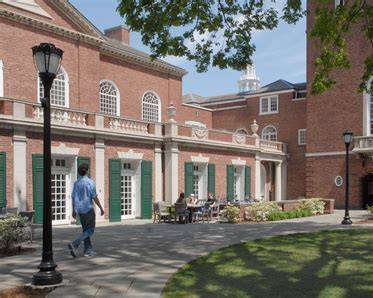
Branford College | Pierson College | Davenport College
Related New Jersey History
James Howe House
Montclair, New Jersey
The James Howe House preserves the story of James Howe, a formerly enslaved man who gained his freedom in 1817, and provides an important connection to the African American history of the same community in which generations of Cranes lived.
His surviving home broadens the historical landscape beyond prominent families and institutions, helping recover the experiences of people whose lives formed part of the same developing community.
Why it matters: Understanding Cranetown and early Montclair requires recovering the experiences of all the people who lived and worked within the community, not only its most prominent families.

James Howe House
The historic Montclair home of James Howe, a formerly enslaved man who gained his freedom in 1817.
Other Historic Crane Places
Historic houses and museums across New Jersey preserve the stories of other people and branches bearing the Crane name. Their precise genealogical relationships to the Crane Mill family are being researched and should not be assumed unless supported by documentary evidence.

Crane-Phillips House
Cranford, New Jersey
The Crane-Phillips House is a nineteenth-century Crane family home preserved by the Cranford Historical Society and operated as a historic house museum.
Why it matters: The house preserves another New Jersey story associated with the Crane name while providing an opportunity for further research into the relationships among the state's different Crane families.
Stephen Crane House
Asbury Park, New Jersey
The Stephen Crane House is the surviving American residence associated with author Stephen Crane, best known for The Red Badge of Courage. The house now serves as the headquarters of the Asbury Park Historical Society.
Why it matters: The house preserves the legacy of one of America's important literary figures bearing the Crane name. Any genealogical relationship to the Crane Mill family should be established through documentary research rather than assumed from the shared surname.
Acorn Hall
Morristown, New Jersey
Acorn Hall is the historic home associated with the Crane-Hone family and today serves as the headquarters and museum of the Morris County Historical Society.
Why it matters: The property preserves another branch of New Jersey history associated with the Crane name and provides an additional subject for genealogical research into possible connections with the broader Crane family.